
Here’s a longer, more detailed, and refined version of your content suitable for AdSense approval:
Few figures in American history are as respected and influential as George Washington. Widely known as the “Father of His Country,” Washington played a central role in the founding of the United States. His leadership, both on the battlefield and in government, helped shape the nation during its earliest and most uncertain years.
In 1789, Washington became the first President of the United States following a unanimous decision in the nation’s first presidential election. His leadership was so widely trusted that he was again elected unanimously for a second term in 1793, making him the only president in American history to receive 100 percent of the electoral vote. During his presidency, Washington set many important precedents, including the peaceful transfer of power and the tradition of serving only two terms, which later became a formal rule in American politics.
Before his presidency, Washington had already established himself as a skilled and determined military leader. As Commander-in-Chief of the Continental Army during the American Revolutionary War, he faced one of the most powerful armies in the world—the British forces. At the time, the American colonies were not yet an independent nation, and the army was often under-equipped, poorly trained, and lacking resources. Despite these challenges, Washington’s persistence and strategic thinking kept the revolutionary cause alive.
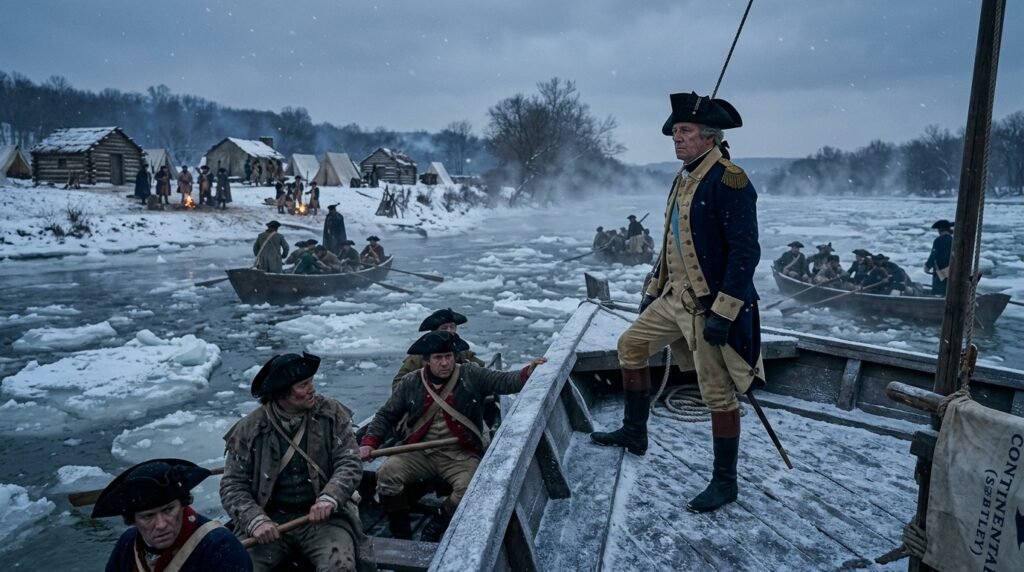
One of the most famous moments of the war was the Crossing of the Delaware. During the winter of 1776, Washington made the bold decision to lead his troops across the icy Delaware River. This daring move surprised enemy forces and led to a crucial victory in New Jersey. It is widely regarded as one of the most important and courageous military actions in history, demonstrating Washington’s willingness to take calculated risks when the situation demanded it.
Another defining chapter in Washington’s leadership came during the harsh winter at Valley Forge in 1777–1778. There, Washington and his army of more than 11,000 soldiers endured extreme cold, food shortages, and difficult living conditions. Thousands of soldiers died due to illness and exposure. However, rather than breaking the army’s spirit, this period became a turning point. Under Washington’s guidance and the training efforts of his officers, the army became more disciplined, organized, and prepared for future battles.
When spring arrived, the Continental Army emerged from Valley Forge stronger and more unified. This transformation allowed them to continue the fight against British forces with renewed determination. Washington’s ability to inspire resilience and maintain order during such a difficult time earned him lasting respect among his troops and fellow leaders.
George Washington’s legacy goes far beyond his military victories. His leadership helped establish the foundation of a new nation built on principles of unity, perseverance, and responsible governance. His contributions during both war and peace secured his place as one of the most important figures in American history, and his influence continues to be felt to this day.